
Summary: Low Voltage Wiring Services provide the foundation for modern business technology, including structured cabling, fiber optics, security systems, Wi-Fi networks, and VoIP communications. Proper installation improves connectivity, reliability, scalability, and long-term operational performance. |
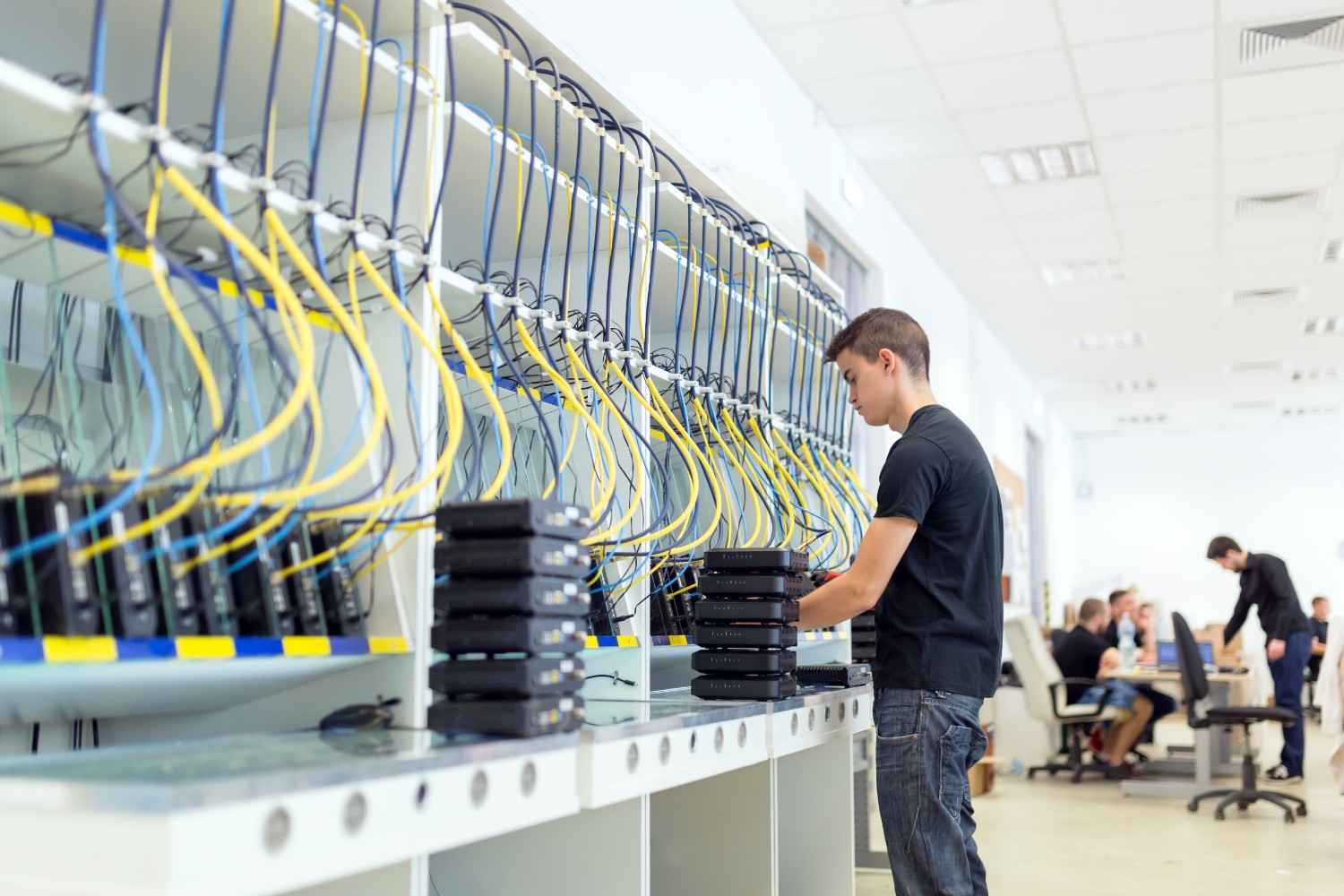
Modern workplaces operate through their dependency on interconnected system networks. Office environments require cloud computing services and video conferencing systems to function. Warehouses use scanning technology together with inventory management software for their operations. Hospitals use protected online networks to obtain patient medical records.
The entire system requires dependable network connections to function properly. The building’s power system supplies essential energy to support networking operations. The system transmits between servers and cameras and wireless access points and all building communication networks. The system becomes increasingly vital to building operations as more devices connect to the network.
According to the U.S. Department of Energy organizations now utilize smart building technologies that enable them to create operational efficiency through their connected systems.
The entire digital infrastructure of modern offices and warehouses and healthcare facilities depends on low voltage wiring systems.
Related Reading: Low Voltage Cabling vs Electrical Wiring: What Building Owners Need to Know
Low voltage wiring refers to electrical systems that operate at 50 volts or less. Unlike traditional electrical wiring that powers lighting and heavy equipment, low voltage systems transmit data and communication signals.
These systems allow devices, networks, and building technologies to interact.
In simple terms, low voltage wiring acts as the communication network inside a building.
Most modern commercial buildings rely on multiple low voltage systems working together.
Examples include:
Professional installations typically follow TIA/EIA structured cabling standards, which help ensure consistent network performance and easier expansion over time.
Related Reading: The Future of Low‑Voltage Cabling in AI‑Powered Workspaces
Business operations today rely heavily on connected technology. Employees share files through cloud platforms. Teams communicate through video calls. Security systems monitor facilities around the clock.
When the infrastructure supporting these systems is weak, problems appear quickly. In many cases, these problems originate in the underlying cabling infrastructure.
A properly designed low voltage system helps organizations maintain reliable operations. It provides:
Strong infrastructure also reduces downtime and improves operational efficiency across the entire facility.
Commercial facilities typically rely on several core low voltage systems. Each one supports different aspects of business operations.
Structured cabling connects computers, servers, switches, and wireless access points throughout a building. Most commercial installations rely on category cabling or fiber optics.
The following table compares the most commonly used cabling types.
Cabling Type | Speed Capability | Typical Use |
Up to 1 Gbps | Small offices and legacy networks | |
Up to 10 Gbps (short distance) | Modern office environments | |
CAT6A | Up to 10 Gbps (long distance) | High-performance business networks |
10+ Gbps and higher | Data centers and building backbone |
Fiber optic cables are often used as the backbone of large networks, connecting multiple floors or buildings while supporting extremely high bandwidth.
Modern security systems depend heavily on network connectivity.
Low voltage wiring enables systems such as:
Many of these devices operate using Power over Ethernet (PoE) technology. This allows both power and data to travel through a single cable, reducing installation complexity.
Wireless networks rely on structured cabling behind the scenes.
Each wireless access point connects to the building’s network through low voltage wiring. This infrastructure allows Wi-Fi signals to reach employees, devices, and operational systems.
Reliable wireless coverage is essential in environments such as:
Proper cabling ensures strong signal coverage and minimizes connectivity disruptions.
Related Reading: Exploring Low Voltage Wiring Services for Businesses
Office environments depend on stable network connectivity. Employees rely on digital tools to collaborate, communicate, and access data throughout the day.
Low voltage wiring supports a wide range of office technologies.
Typical office infrastructure includes:
Structured cabling also improves network organization. Clearly labeled cables and well-designed network rooms allow IT teams to maintain systems more efficiently.
As companies grow, structured infrastructure makes it easier to expand networks and support new devices.
Warehouses operate in large, fast-moving environments. Workers rely on mobile devices, scanners, and automated systems to track inventory and manage shipments.
Reliable connectivity is essential.
Low voltage infrastructure supports several warehouse technologies.
These systems include:
Not every signal travels far without help, so thick cables run beneath the floor. Where cords can’t reach, floating signals take over through wall-mounted transmitters.
Falling behind on deliveries often starts with shaky systems underneath. A weak setup means tasks take longer, then everything piles up. When gear fails too often, people work harder just to stay even.
Healthcare environments are in dire need of a reliable network. Doctors, nurses, and administrators working within healthcare environments trust digital systems in order to be able to work all day long.
Low voltage infrastructure helps support critical healthcare technologies.
These systems include:
Because healthcare organizations handle sensitive patient data, networks must remain stable and secure. Reliable infrastructure helps ensure that critical systems remain available when needed.
Start by mapping out every wire path before any tools touch the ground. Skilled workers move step by step because skipping ahead risks weak connections later on.
Starting with the floor plan, technicians take a close look at how spaces are arranged. From there, they pinpoint where cables will run through walls or ceilings. Equipment closets show up next on their checklist, marking spots for gear storage. Where each gadget lands ties into both access and power needs.
A blueprint takes shape when engineers map out wiring based on what tech gear will actually run inside the building. Built right, the system handles today’s demands while leaving room for upgrades down the line.
Cables snake through walls as technicians set up network racks on frames. Patch panels go in beside them, wired neatly by hand. Wireless access points mount high, placed carefully across each floor.
A single test checks every cable for how well it carries signals. Bandwidth limits get measured too, one by one. What matters shows up clearly during these trials. Every strand must prove its strength before moving on.
Last of all, every part of the network gets tags and records. That way, tech staff can keep track of what exists while mapping out later improvements.
Related Reading: The Impact of Smart Technology on Low Voltage Cable Installation
Most commercial buildings rely on several interconnected systems to support daily operations.
System | Purpose | Common Environments |
Structured cabling | Connects network devices and servers | Offices, data centers |
Fiber optic backbone | High-speed building connectivity | Large facilities |
Wireless access points | Provides Wi-Fi coverage | Offices, warehouses |
Security cameras | Surveillance monitoring | Commercial buildings |
Access control systems | Secure building entry | Offices, hospitals |
VoIP communication | Digital phone systems | Corporate environments |
Together, these systems create the connected infrastructure modern workplaces depend on.
Network Drops has been delivering network cabling and infrastructure services to enterprises throughout New Jersey and Pennsylvania since its founding in 1986 as a Magna5 division. We specialize in designing and installing structured cabling systems tailored to commercial facilities.
Services include:
The customized installation process creates building designs which meet their specific operational needs. The approach establishes reliable infrastructure systems which will provide long-term performance to businesses.
Network Drops creates network systems for offices, warehouses and healthcare facilities to help modern technology needs of organizations.
Low voltage wiring supports communication and technology systems such as structured cabling, wireless access points, security cameras, VoIP phone networks, and access control systems.
Industries such as offices, warehouses, healthcare facilities, schools, retail stores, and data centers all rely on low voltage infrastructure.
Project timelines vary depending on building size and complexity. Smaller office installations may take a few days, while larger facilities may require several weeks.
Yes. Many businesses upgrade low voltage infrastructure during renovations or technology upgrades.
CAT6 cabling is commonly used for internal network connections within a building. Fiber optic cabling supports much higher speeds and longer distances and is often used as the backbone for larger networks.

Scott Fcasni is the driving force behind Magna5’s commercial datacomm cabling division, delivering expert solutions that power reliable, high-performance network infrastructures. With extensive experience in structured cabling and a commitment to precision, Scott ensures that every project—whether for small businesses or large enterprises—meets the highest standards of quality and scalability.
