
Summary : A dedicated network cabling subcontractor helps ensure a fast and scalable infrastructure for your business. They lay and test cables like CAT6 and fiber, reduce downtime, simplify future upgrades, and save costs by creating an effective and problem-free network.
Business is all about networks, and this is where your business begins. A stable network cabling infrastructure keeps your teams connected, your data flowing, and your operations expanding.
By introducing a reliable cabling partner, you are not just laying out wire; you are creating a solid foundation of trust in the very fabric of your business.
Your wired network carries the load even in cloud computing and in wireless systems. Every second of downtime hits hard. According to the IT IC survey, more than 90% of mid- and large-sized companies report hourly downtime costs exceeding $300,000. That is a cost no business wants to pay.
Meanwhile, the structured cabling industry is booming. Analysts expect the market to grow from $15.78 billion in 2025 to $38.47 billion by 2034, expanding at a CAGR of 10.46%. Clearly, investing in structured cabling is not just smart, it is necessary.
Partnering with a specialist means every part of your network is installed, tested, and built for long-term results. Here’s what that really means for your business.
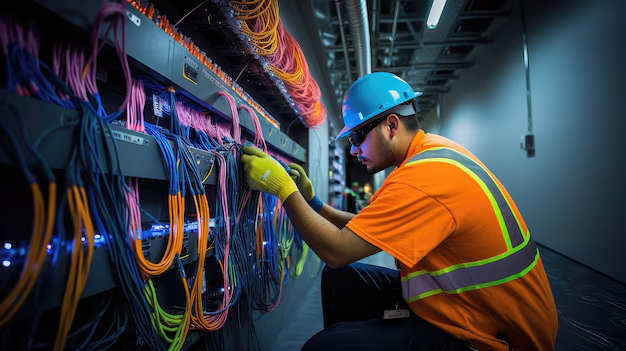
The wired network forms the backbone of the entire system, even though wireless and cloud services have become common. When CAT6 and fiber optics are properly installed, they provide fast, reliable connections with minimal delay. This ensures continuous availability of critical business applications such as VoIP, video conferencing, and cloud access.
Consider it like this: your wireless network is supported by the wired network. If the wiring is of poor quality, then no matter what high-end Wi-Fi or cloud solution you use, it will not deliver the best performance.
A dedicated network cabling subcontractor comes with expertise that general electricians or in-house teams rarely match. Here’s what sets them apart:
Structured cabling is an investment, not a patch. A company can install a fiber backbone and CAT6a today and easily add Wi-Fi 6/7 or IoT devices tomorrow. You will not have to tear out walls or pull new cables just to keep up with growth.
Deciding on a partner is not just about listing their prices and picking the cheapest one. Choose a firm that has the right expertise, certifications, and clear communication to handle the entire process correctly from start to finish.
A structured cabling system does more than keep you connected; it makes your entire operation faster, safer, and easier to manage.
Working with Network Drops is simple, transparent, and efficient. Every step is planned to fit your business schedule and goals.
Clean rooms or low-voltage areas, which are considered special environments, are evaluated to ensure the network fulfills its specific needs.
The use of CAT6a, fiber, trays, racks, and cable containment is all planned in a way that the space, airflow, and performance are optimized.
Cables are pulled by licensed installers with utmost care. All practices including adherence to bend radii, separation of power and data lines, and labeling of each end, are followed. The project is divided into phases to minimize the inconvenience.
Every link is tested, certified, and documented. Floor plans, outlet schedules, and patch-panel maps are delivered to your IT team.
Moves, adds, and changes (MACs) are handled professionally. Upgrades and expansions are smooth and predictable.
A lot can go wrong when cutting corners. Knowing which mistakes to avoid will save time, money, and frustration later.

he right cabling setup pays for itself over time. Measuring performance, uptime, and savings demonstrates the value a solid network adds.
Reliable cabling prevents downtime. Many firms lose $300,000+ per hour, making proper infrastructure a clear return on investment.
Structured cabling provides quicker access, fewer dropouts, and easier collaboration, hence improving productivity.
Future-ready networks reduce the time and cost of adding devices, outlets, or new departments.
Good system documentation allows IT personnel to focus on strategic tasks instead of constantly troubleshooting cabling.
KPI Metrics:
Good wiring does more than keep devices plugged in; it keeps your business moving without a hitch. When you work with Network Drops, you get a setup that’s reliable today and flexible for tomorrow. We focus on doing the job right so you don’t have to worry later.
Ready to build a network that grows with you? Reach out to Network Drops for a free site audit and custom plan.
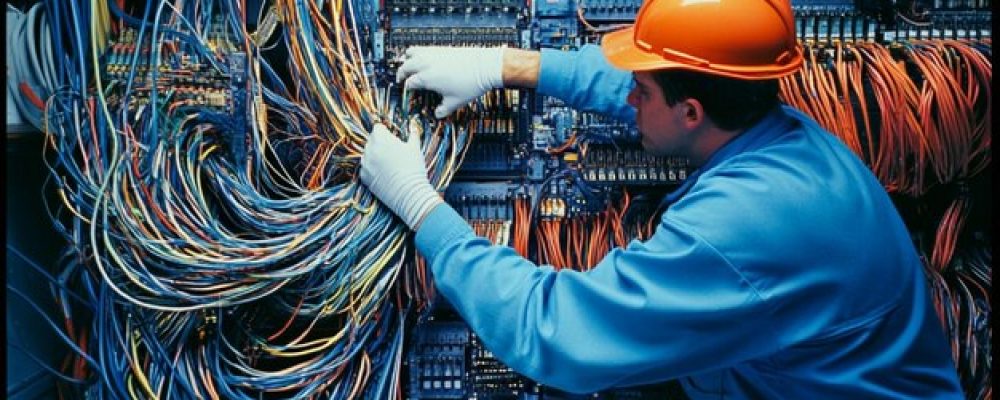
They specialize in data, voice, and fiber-optic infrastructure. Electricians handle power circuits, but may not meet network performance or compliance standards.
With high-quality components and professional installation, 10–15 years is typical. Planned upgrades extend this even further.
Absolutely. Properly structured cabling prevents network issues that slow business, protecting revenue and efficiency.
Professional subcontractors phase the work, coordinate with your teams, and often work out-of-hours, ensuring that business operations continue without interruption.
Yes. Modular designs allow new outlets, upgrade to faster cable types (CAT6a, fiber), and handle smooth MACs as your business grows.
"*" indicates required fields

Scott Fcasni is the driving force behind Magna5’s commercial datacomm cabling division, delivering expert solutions that power reliable, high-performance network infrastructures. With extensive experience in structured cabling and a commitment to precision, Scott ensures that every project—whether for small businesses or large enterprises—meets the highest standards of quality and scalability.
