
Summary : In 2025, businesses no longer need to choose between speed and savings when building their networks. The rise of hybrid cabling solutions strategically blending fiber optics and copper has transformed how smart offices connect. This blog explores why relying solely on one type of cable is an outdated approach and how modern infrastructures benefit from placing fiber where speed and bandwidth matter most, while leveraging copper’s affordability, flexibility, and PoE capabilities elsewhere. From backbones to break rooms, this mix-and-match strategy is redefining performance and scalability. And with experts like Network Drops guiding the design, hybrid networks aren’t just efficient, they’re built to evolve.
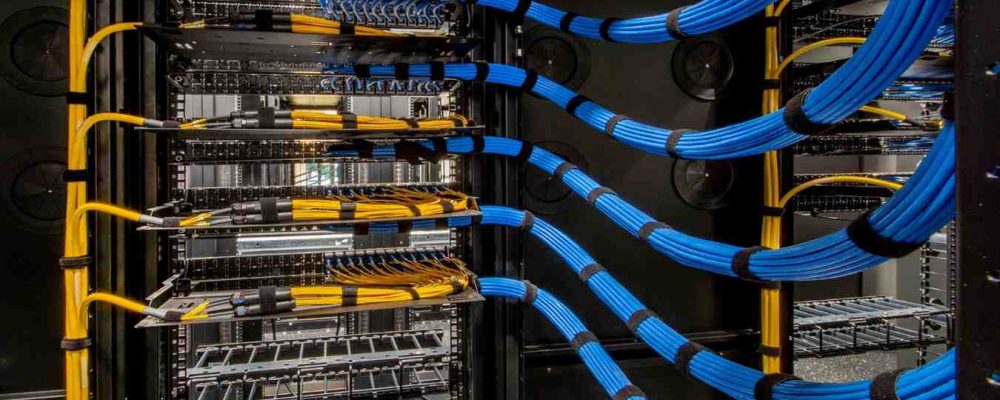
There was a time when designing a business network felt like standing at a crossroads.
On one path, copper cabling is affordable, familiar, and good enough for most day-to-day operations; on the other, fiber optics is fast, future-ready, and expensive. Most companies picked a lane based on budget or building layout, hoping it would hold up as technology evolved.
But that “either-or” mindset? It’s outdated.
Welcome to 2025, where smart offices are no longer forced to choose sides. The future of structured cabling isn’t one-size-fits-all. It’s a thoughtful blend. An architectural approach that considers how your people work, where your bandwidth really needs to go, and how to scale intelligently.
Hybrid cabling solutions, the strategic mix of fiber and copper, are becoming the norm for companies that want it all: speed, reliability, and affordability.
Rather than overbuilding with fiber in every wall, or bottlenecking performance by leaning too heavily on copper, modern businesses are asking a better question:
Where does each technology make the most sense?
That mindset is driving a shift not just in cables, but in how entire networks are planned, installed, and upgraded, especially in a world that runs on real-time video calls, massive cloud-based apps, and a growing web of smart devices.
Let’s break down what hybrid cabling really means and why it’s becoming the smartest investment for offices looking to work faster without blowing their budgets.
Appreciating the hybrid approach helps one understand what each cable type brings to the table.
Fiber optics use light to transmit data, giving them a massive edge in speed and distance. There are two primary types:
Fiber offers extremely low signal loss and immunity to electromagnetic interference (EMI), making it a powerhouse for high-demand areas like server rooms or data centers.
But it’s not perfect. Fiber can be more expensive to install, more delicate to handle, and overkill in spaces that don’t need gigabit-level speeds.
Copper cables, especially Cat6, Cat6A, and Cat8, have improved dramatically in recent years. While not as fast as fiber over long distances, they can still deliver excellent speeds for shorter runs.
Cat8, for example, supports frequencies up to 2 GHz and speeds of up to 40 Gbps over 30 meters.
Where copper shines most, though, is in its versatility. It supports Power over Ethernet (PoE), allowing one cable to deliver both power and data. That makes it ideal for devices like IP cameras, phones, wireless access points, and even smart lighting systems.
And it’s cheaper. Faster to install. Easier to maintain in tight spaces.
So Which One’s Better?
Wrong question.
The better question is: where should you use each to get the best bang for your buck? That’s the heart of hybrid cabling solutions.
Imagine trying to wire an entire building with just one material. You’d either waste a fortune or compromise performance.
Hybrid networks dodge both problems.
In these cases, fiber is non-negotiable. It’s built for high-octane use.
A good analogy? Think of fiber as your office’s interstate highway, and copper as the local roads. Both are necessary. But you don’t need a six-lane expressway to get from your desk to the coffee machine.
Picture this: a fast-growing marketing firm in a three-story office.
No waste. No lag. Just smart, efficient infrastructure.
Let’s talk money because at the end of the day, your cabling strategy needs to justify itself.
Sure, fiber sounds impressive. But running it everywhere, especially to low-demand outlets, is like installing marble floors in a storage closet. You’ll pay more for very little return.
Hybrid networks avoid this by allocating resources where they matter most.
Fiber in your network backbone ensures lightning-fast data flow across floors or departments. It prevents traffic jams where they’d hurt the most.
Copper at the endpoints keeps things simple, cost-effective, and organized.
Power over Ethernet is a hybrid network’s secret weapon.
Instead of running separate lines for power and data, copper handles both. That’s fewer cables, fewer contractors, and faster installs, especially for devices mounted on ceilings or in hard-to-reach spots.
A hybrid cabling system isn’t something you wing.
Done right, it’s an elegant balance of performance and practicality. Done wrong, it’s a mess of mismatched components and bottlenecks.
Here’s how smart offices approach it.
Design with the whole picture in mind. A hybrid solution connects your server room to every endpoint in a way that maximizes flow, not just speed.
That might mean:
It’s not just about installing cables; it’s about managing them in the long term.
Smart offices use:
This kind of clarity helps your IT team troubleshoot faster, scale smoother, and avoid spaghetti cable nightmares.
Smart offices aren’t built with guesswork. They’re built with foresight, experience, and strategy.
Hybrid cabling solutions aren’t a compromise; they’re an upgrade. A way to build lean, powerful, flexible networks that align with your workflow, not just your floor plan.
Whether you’re expanding your space, upgrading outdated infrastructure, or starting fresh, Network Drops has been designing and installing custom cabling systems across New Jersey and Pennsylvania for over a decade.
From smart zoning and high-speed backbones to efficient PoE installs, our team turns tangled cabling problems into streamlined, scalable solutions without pushing fiber where you don’t need it.
Absolutely. It’s common practice in modern structured cabling designs. A well-planned hybrid setup leverages the best of both worlds.
Fiber serves high-demand areas such as servers, data centers, and media stations. Copper is perfect for standard workstations, phones, printers, and IoT devices.
Yes, but positively. Using fiber where it’s needed and copper where it makes sense ensures faster, smoother network performance overall.
Not necessarily. Full fiber may sound cutting-edge, but it’s often overkill and more expensive than necessary. Hybrid networks are tailored for performance and cost-efficiency.
It depends on your space and existing infrastructure, but hybrid installations are often faster and less disruptive than full rewiring jobs, especially with experienced installers.
"*" indicates required fields

Scott Fcasni is the driving force behind Magna5’s commercial datacomm cabling division, delivering expert solutions that power reliable, high-performance network infrastructures. With extensive experience in structured cabling and a commitment to precision, Scott ensures that every project—whether for small businesses or large enterprises—meets the highest standards of quality and scalability.
