
Summary : Smart offices rely on strong network cabling to support IoT integration and connected technologies. A well-planned cabling infrastructure enables seamless communication between devices such as sensors, smart lighting, security systems, and automation tools. By providing reliable data transfer, scalability, and reduced downtime, network cabling forms the foundation of future-ready offices that improve efficiency, safety, and workplace functionality.
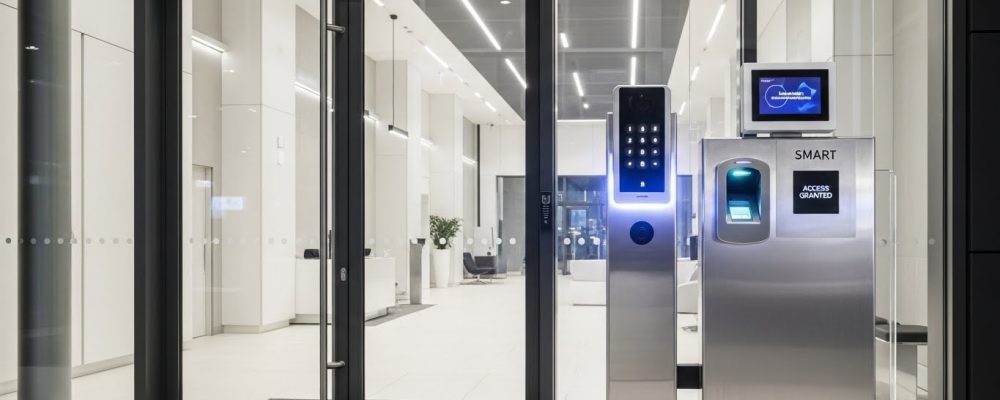
Access control systems have come a long way from the traditional lock and key. In today’s fast-paced world, security and convenience are more important than ever, and the evolution of access control technology has been remarkable. From simple keys to cutting-edge biometric solutions, these systems have continuously advanced to improve security, enhance efficiency, and make our lives easier.
Access control has always protected physical spaces, valuable information, and assets. Over time, we’ve seen a shift from essential locks and keys to advanced biometric systems that use unique human characteristics for identification. These innovations boost security and provide a more streamlined and user-friendly experience.
This guide will discuss the latest advancements in door access control systems, helping you better understand how these technologies are shaping the future of security.
Access control has been key in protecting people and property for thousands of years, dating back to ancient civilizations like Egypt, Greece, and Rome. Early locks were made from wood or metal and used large, bulky keys. One of the earliest mechanical locks was discovered in Nineveh, dating back to around 2000 BC. This simple wooden bolt lock was operated with a wooden key that had pegs of different lengths to fit into corresponding slots.
The Industrial Revolution marked a turning point in access control, making locks and keys more widely available. By the 1960s and 70s, electronic access control systems began to emerge, including punch card-based systems that automated access management. In the 1980s, proximity card technology, using radio-frequency identification (RFID), allowed users to simply wave their cards in front of a reader for hands-free access. This new approach was more convenient and streamlined than traditional key insertion.
The fundamental shift to fully electronic access control came with the development of smart cards and keycards. These technologies allowed businesses to manage access more efficiently, providing a more secure and convenient solution than mechanical locks.
In recent years, access control systems have continued to evolve by integrating with other security technologies. Digital systems now often work in tandem with video surveillance, alarm systems, and building management systems (BMS). These integrations enable real-time monitoring, quick responses to incidents, and an added layer of security, all within a unified system. Combining access control with surveillance cameras, alarms, and BMS creates a comprehensive, interconnected security system that offers stronger protection for buildings and their occupants.
This evolution reflects the shift from simple locks to today’s advanced, interconnected systems. As technology advances, the future of access control holds even more promise for enhanced convenience, security, and integration with other smart technologies.
AI and machine learning can process vast amounts of internal and external data. These advanced tools can detect patterns, trends, and subtle connections that might otherwise go unnoticed. AI-powered systems can automatically generate detailed reports on relationships and offer actionable recommendations. These insights can be invaluable in making smarter decisions for day-to-day activities, such as:
By tracking and analyzing access data, AI can offer valuable insights into user behavior, entry patterns, and potential security risks. It can also integrate information from external data sources. This capability allows AI to:
Specific AI systems can seamlessly integrate with a variety of other security tools, such as:
This integration allows for a more unified platform, improving monitoring and control capabilities. With all systems working together, security teams can gain a more comprehensive view of the environment and respond more efficiently to emerging threats.
In today’s fast-paced world, security systems are evolving rapidly. The days of relying on a simple lock and key are behind us. Today’s world demands more advanced and sophisticated door access control solutions. As security and convenience become top priorities, several trends are reshaping how we manage access.
Among the latest trends in access control are the growing use of mobile and touchless systems, cloud-based solutions, and biometrics. Artificial intelligence (AI) and machine learning also play a larger role, helping these systems make smarter decisions, predict potential security risks, and integrate seamlessly with other security technologies.
With increased attention to hygiene, many businesses are turning to contactless solutions, making touchless access a key element of modern security. These trends highlight the shift toward more efficient, flexible, and secure access control systems that meet the evolving needs of both businesses and individuals.
The advancements in door access control systems have revolutionized how we secure buildings and premises. With innovations like biometric authentication, mobile access, and cloud-based management, today’s systems provide smarter, more efficient, and adaptable security solutions.
These technologies are designed to meet the evolving needs of both businesses and individuals. As AI and machine learning continue to shape the future of access control, we can look forward to even more sophisticated, user-friendly, and effective systems. The future of door access control is bright, with a seamless blend of security, convenience, and technology.
Ready to upgrade your access control system? Explore our Network Drops solutions to ensure your building stays connected, secure, and future-ready.
AI-powered automation will streamline tasks, improve decision-making, and enhance productivity by handling repetitive tasks. This will allow employees to focus on higher-value work. It will also enable businesses to make real-time, data-driven decisions, boosting efficiency and reducing human error.
Businesses should prepare for threats like AI-driven cyberattacks, ransomware targeting critical infrastructure, and advanced phishing schemes. With increased remote work, securing cloud environments and safeguarding against social engineering attacks will also be key priorities. Ensure your cybersecurity infrastructure is ready with our secure Network Drops.
Businesses are adopting sustainable technologies, such as renewable energy sources, energy-efficient systems, and waste-reduction tools. Green building technologies, circular economy practices, and eco-friendly materials are becoming integral to operations to reduce their carbon footprint and enhance sustainability.
Advancements like virtual reality (VR) meetings, AI-powered collaboration tools, and enhanced cybersecurity for remote networks are shaping the future of work. These technologies will enable more immersive and productive remote work experiences while improving communication and security for distributed teams.
Businesses can use data analytics to identify trends, understand customer behavior, and optimize operations. By analyzing key metrics, companies can make informed decisions, improve customer experiences, and gain a competitive edge in an increasingly data-driven market. Enhance your data-driven strategy with reliable and scalable Network Drops.
"*" indicates required fields

Scott Fcasni is the driving force behind Magna5’s commercial datacomm cabling division, delivering expert solutions that power reliable, high-performance network infrastructures. With extensive experience in structured cabling and a commitment to precision, Scott ensures that every project—whether for small businesses or large enterprises—meets the highest standards of quality and scalability.
