
Low Voltage Wiring for Commercial Buildings: Codes, Compliance & Best Practices

Summary: Low-voltage wiring is what keeps a commercial building connected. It ties together the network, cameras, badge readers, fire alarms, and HVAC controls. Even though it runs at a lower voltage, it still has to meet code and pass inspection. The biggest problems usually come from poor planning, wrong cable types, bad separation from high voltage, or skipped testing.

Table of Contents
Low Voltage Wiring for Commercial

People only start discussing low-voltage wiring when they need to fix a broken system. 

The internet experiences a slowdown. The camera feed completely disconnects. The badge reader becomes unresponsive. People start investigating what exists above the ceiling tiles.

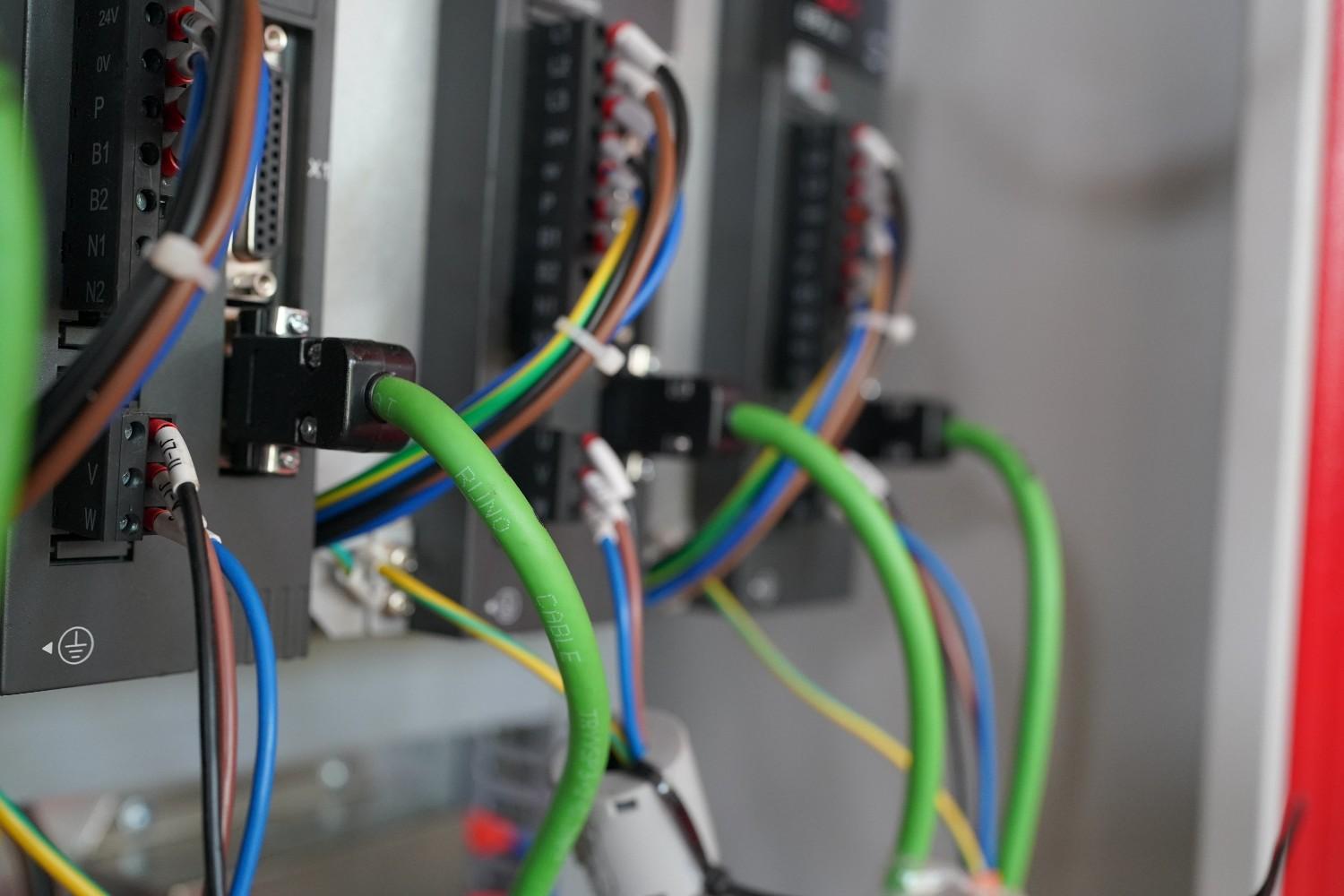
Commercial buildings use low-voltage wiring to connect all their essential systems. The network room connects to the front door access system, the conference room screen, and the HVAC controls. The work lacks attractive features, but proper execution makes the building operate smoothly.

Facilities today depend on their automated systems, which control building operations. The U.S. Energy Information Administration reports that 88 percent of U.S. households use air conditioning. The United States relies on low-voltage controlled systems because our dependency reaches that particular usage level.

People continue to show increasing interest in systems that require internet connections. The U.S. Bureau of Labor Statistics projects 6 percent growth for network and computer systems installers through 2032. The structured cabling and infrastructure field continues to expand because of the current growth of base network systems.

People believe that low-voltage wiring exists only as wall cables. The system controls building operations throughout its entire operational period. The system remains out of awareness for people who install it with precision. The system begins to create minor problems, which later develop into serious faults when installation occurs without proper methods.

What Is Low-Voltage Wiring?

Low-voltage wiring handles communication and control systems instead of heavy electrical loads. It usually runs at 50 volts or less, often around 12, 24, or 48 volts, depending on the device.

It’s what connects your switches, cameras, access panels, and automation equipment. It’s different from the wiring that powers outlets or lighting circuits. The purpose isn’t raw power. It’s signal and coordination.

Even though the voltage is lower, the work still demands attention. Run it too close to high voltage lines, and you risk interference. Use the wrong cable in the wrong space, and you can fail inspection. Skip labeling, and the next technician spends hours tracing wires.

The details are what separate a clean install from a future headache.

Where Low-Voltage Wiring Is Used in Commercial Buildings

Low-voltage wiring supports nearly every technology inside a commercial facility.

Network Infrastructure

Structured & network cabling forms the backbone of every office network.

Common components include:

  • Cat6 and Cat6A Ethernet cabling
  • Fiber optic backbone
  • Power over Ethernet (PoE) systems
  • Data closets and server rooms

Cat6A supports up to 10 Gbps speeds, which makes it suitable for growing offices. Fiber optic cabling supports long-distance, high-speed data transmission with minimal signal loss.

If the network fails, productivity drops immediately.

Security and Access Control

Security systems depend heavily on stable low-voltage wiring.

These systems include:

  • CCTV cameras
  • Card readers
  • Biometric access systems
  • Motion detectors

Interference or poor terminations can weaken system performance. Clean installation ensures reliability.

Fire Alarm Systems

Fire detection systems operate under strict codes such as NFPA 72. Low-voltage wiring connects panels, detectors, and notification devices.

Inspectors review these installations carefully. Improper cable ratings or spacing can delay occupancy approvals.

Building Automation

Modern buildings rely on automation systems for efficiency.

Low-voltage wiring supports:

  • HVAC controls
  • Smart lighting
  • Energy monitoring
  • Occupancy sensors

These systems reduce energy consumption and improve comfort. They also require scalable infrastructure.

Audio and Visual Systems

Conference rooms and collaboration spaces rely on dependable connections.

Low-voltage cabling supports:

  • Video conferencing
  • Digital signage
  • Paging systems
  • Sound masking

Poor wiring shows up quickly in these environments.

Low Voltage Wiring Code and Compliance

Compliance protects your business, your occupants, and your investment.

The National Electrical Code (NEC) governs low-voltage wiring through Article 725. This section addresses power-limited circuits commonly used in commercial buildings.

Circuit Classifications

The NEC defines three circuit types:

  • Class 1 circuits allow higher power with overcurrent protection.
  • Class 2 circuits are power-limited and common in commercial systems.
  • Class 3 circuits allow slightly higher voltage than Class 2 while remaining power-limited.

Most commercial communication and security systems operate under Class 2 rules.

Cable Designations

Cable ratings determine where a cable may be installed.

  • CL2: General-purpose applications
  • CL2P: Plenum-rated for air-handling spaces
  • CL2R: Riser-rated for vertical installations
  • CL3: Higher voltage rating
  • PLTC: Power Limited Tray Cable

Using the wrong cable type can fail inspection and create safety risks.

Separation Requirements

Low-voltage cables must remain separated from high-voltage conductors.

Standard guidelines include:

  • At least 8 inches of separation for unshielded cable
  • Minimum 2 inches separation for shielded cable
  • 90-degree crossings permitted without contact

These requirements protect signal integrity and safety.

Inspections and Approval

Commercial installations typically require:

  • Rough-in inspection
  • Final inspection

The Authority Having Jurisdiction (AHJ) verifies compliance before approval.

Failing inspection delays occupancy and increases costs.

Best Practices for Commercial Low Voltage Installation

Proper installation begins with planning.

Plan Before Pulling Cable

Map routes carefully. Coordinate with HVAC and plumbing teams. Avoid interference zones. Planning reduces rework.

Choose the Correct Cable

Select cable based on performance needs and environment.

  • Cat6A for higher bandwidth
  • Fiber for long-distance runs
  • Shielded cable in high-noise areas
  • Plenum-rated cable where required

Future-proofing protects long-term investment.

Respect Bend Radius and Pull Limits

Cables must not kink or bend sharply. Fiber optic cables are especially sensitive. Damage may not show immediately, but it can weaken performance over time.

Label and Document Everything

Follow TIA/EIA structured cabling standards.

Label:

  • Patch panels
  • Cable runs
  • Termination points

Clear documentation simplifies maintenance.

Test and Certify the System

Certification tools verify performance.

Testing should confirm:

  • Continuity
  • Signal integrity
  • PoE delivery
  • Fiber performance

Skipping testing risks hidden faults.

Design for Scalability

Commercial buildings evolve. Install extra conduits. Leave rack space. Plan for bandwidth growth. Scalable infrastructure prevents costly retrofits.

Common Mistakes to Avoid

Most wiring failures stem from preventable errors.

Common mistakes include:

  • Running low voltage too close to high voltage
  • Using incorrect cable ratings
  • Skipping plenum requirements
  • Poor termination practices
  • Lack of labeling
  • Ignoring NEC updates
  • Skipping final certification testing

Each mistake increases risk and repair costs.

Why Professional Installation Matters

Low-voltage work appears straightforward from a distance. The construction of commercial buildings requires complex electrical work because there are multiple fire-rated walls and ceiling systems, and electrical lines, and all inspection schedules and requirements for future expansion to consider. Small installation shortcuts create major problems, which appear after several months, as they cause inspection failures, testing delays, and additional troubleshooting time. 

The value of experience shows its importance. The project requires us to install cable, but we need to create permanent infrastructure that complies with regulations, passes testing, and is simple to maintain after many years. The project requires us to install cable, but we need to create permanent infrastructure that complies with regulations, passes testing, and is simple to maintain after many years.

In commercial environments, the details make the difference:

  • Proper separation from high-voltage wiring prevents interference and inspection issues.
  • Correct cable ratings avoid problems in plenum spaces and riser shafts.
  • Clear labeling saves time during maintenance and renovations.
  • Thoughtful pathway planning reduces congestion and supports growth.
  • Complete documentation protects compliance and simplifies future work.

Low Voltage Wiring Trends in 2026

Low Voltage Wiring Trends If you compare a commercial network built ten years ago to one being designed today, the difference is obvious. There are more devices, more cameras, more wireless access points, and more systems tied together. The cabling behind the walls has to carry more than it used to.

Wi-Fi 7 Is Raising the Baseline

New wireless standards are pushing more traffic onto wired backbones. Even if most users connect over Wi-Fi, the access points still depend on strong cabling underneath. Older Cat5e runs can become the weak link in newer deployments.

As buildings renovate or upgrade tenants, many are moving straight to Cat6A or fiber so they do not have to revisit the backbone in a few years.

Power Demands Are Increasing

Security systems are not what they were a decade ago. Cameras now record at higher resolutions and run onboard analytics. Access systems are smarter. Many of these devices pull more power over Ethernet than older models did.

That extra load shows up in switch capacity, cable selection, and how network closets are managed. Heat and spacing start to matter more.

Systems Are Blending

Lighting, HVAC, access control, and monitoring are used to operate separately. Now they often share network infrastructure. That makes coordination easier, but it also means a single cabling issue can affect multiple platforms.

Clean terminations and stable backbone design matter more when everything is connected.

Inspections Are More Thorough

Inspectors are paying closer attention to separation distances, plenum ratings, and labeling. Documentation is no longer a courtesy. It is expected.

When testing reports and cable schedules are organized, projects move faster.

Expansion Is Expected

Few commercial spaces stay static. New tenants move in. Departments grow. Equipment changes.

Designing with spare capacity, extra pathways, and room in the rack is becoming standard practice. It is easier to plan for growth during installation than to open finished ceilings later.

Built to Code & Last

Low-voltage wiring functions as the primary conduit inside commercial buildings because it connects almost all building systems. The system requires proper operation to support networks, security measures, access control systems, HVAC controls, and automated systems.

The system operates silently when it functions correctly because it meets all installation requirements and code standards. The system experiences operational issues because it was implemented through an inadequate development process, which creates minor defects that evolve into major system failures.

New Jersey and Pennsylvania commercial projects should include low-voltage infrastructure as a fundamental building component because it provides permanent value to the structure. Network Drops team collaborates with property managers, contractors, and business owners to develop and implement systems that ensure both inspection compliance and operational durability.

Frequently Asked Questions

Any system operating at 50 volts or less, including network cabling, security systems, fire alarms, and building automation controls.

Conduit requirements depend on the environment and local code. Plenum spaces and exposed installations may require specific protection.

It governs power-limited circuits and outlines installation standards for Class 1, 2, and 3 low-voltage systems.

Class 2 circuits limit power more strictly. Class 3 circuits allow slightly higher voltage while remaining power-limited.

They should be inspected during installation and during major upgrades. Routine maintenance checks are also recommended.

Request A Quote Today!