
Summary : Smart offices rely on strong network cabling to support IoT integration and connected technologies. A well-planned cabling infrastructure enables seamless communication between devices such as sensors, smart lighting, security systems, and automation tools. By providing reliable data transfer, scalability, and reduced downtime, network cabling forms the foundation of future-ready offices that improve efficiency, safety, and workplace functionality.
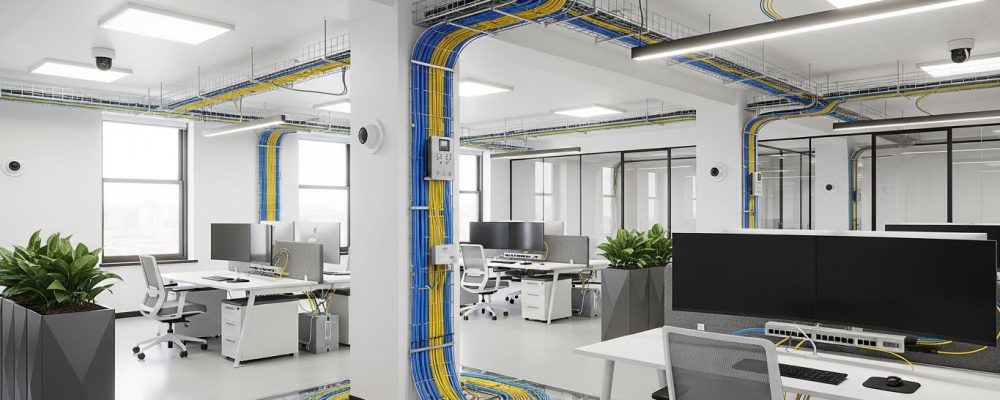
Smart offices are transforming businesses’ operations, offering a seamless blend of technology and workspace design to create more efficient, connected, and productive environments. With the growing adoption of the Internet of Things (IoT), smart offices are becoming the new standard in modern workplaces. IoT devices, from smart lighting and HVAC systems to digital assistants and security solutions, enable businesses to optimize workflows, reduce operational costs, and improve employee experiences.
However, a robust network cabling infrastructure is the foundation of any successful smart office. IoT devices cannot communicate effectively without reliable connectivity, leading to potential disruptions and inefficiencies. This is where a professional network cabling contractor plays a crucial role. They ensure the entire office ecosystem is connected seamlessly, supporting high-speed data transfer and reliable device integration across the workspace.
A smart office is an advanced workspace environment that leverages IoT technology to enhance its functionality and productivity. By integrating interconnected devices, smart offices enable automation, remote control, and data-driven decision-making. Smart systems in these offices may include automated lighting, climate control, security systems, and even smart desks that adapt to employee preferences.
The goal of a smart office is to create a more comfortable, efficient, and collaborative workspace. By utilizing IoT technology, businesses can monitor and optimize office resources in real-time, streamline operations, and provide employees with an enhanced work experience. Smart offices are designed to support the modern workforce’s need for flexibility, connectivity, and technology-driven solutions.
A robust network cabling infrastructure is the foundation for successful IoT integration in smart offices. High-quality cabling systems provide the connectivity required to support an IoT ecosystem’s many devices and sensors. Structured cabling systems ensure efficient data flow, enabling real-time communication between devices and centralized systems. Without a reliable network backbone, IoT devices may experience lag or connectivity issues, disrupting the smart office experience.
Network cabling is the backbone for all IoT devices in a smart office, providing the speed, bandwidth, and reliability needed to support complex systems. Structured cabling systems, such as Cat5e, Cat6, Cat6A, and fiber optics, ensure seamless communication between interconnected devices like smart thermostats, security cameras, lighting systems, and automated meeting room solutions.
A professional network cabling contractor can assess your current and future requirements and ensure that your smart office infrastructure is equipped to support the growing demand for IoT connectivity.
When designing a smart office, it is important to consider wired and wireless connectivity. While both have advantages, combining the two is often the best solution for a robust and flexible smart office network.
Role of Wireless Access Points (WAPs):
Wireless networks offer mobility and flexibility, allowing employees to connect to the network from various office locations. However, WAPs should be strategically placed and supported by a robust wired backbone to ensure reliable coverage and prevent signal drops.
By integrating wired and wireless connectivity, smart offices can achieve the best of both worlds—stability and speed from wired networks and the flexibility of wireless systems. Collaborating with a professional network cabling contractor ensures that your infrastructure supports both types of connectivity for optimal performance.
Structured cabling is the backbone of a well-connected smart office, supporting the seamless operation of IoT devices and other technologies. Investing in structured cabling systems can benefit businesses looking to optimize their smart office infrastructure. Below are five key advantages of structured cabling for smart office environments:
One of the primary benefits of structured cabling systems is scalability. As smart offices evolve, connected devices and technologies will inevitably grow. Structured cabling allows adding or moving IoT devices, workstations, or new technology solutions without extensive rewiring.
By partnering with an experienced network cabling contractor, businesses can ensure that their cabling infrastructure is designed with scalability, supporting current and future requirements.
Efficient cable management is vital for maintaining high network performance. Structured cabling systems help reduce clutter, prevent interference, and streamline data transmission, making them an essential component of any smart office.
A structured cabling system can help smart offices achieve greater network efficiency, allowing all connected devices to operate at their full potential.
Security is a top concern for any business integrating IoT devices, and structured cabling can play a significant role in safeguarding sensitive data.
Businesses can implement a more secure and manageable network infrastructure with structured cabling, ensuring their smart office technology remains protected from cyber threats.
A reliable network is essential for any smart office, where even brief connectivity disruptions can impact productivity and operations.
Reliability is a cornerstone of smart office efficiency, and structured cabling systems deliver the stability needed to keep all devices running smoothly.
While the initial installation of structured cabling may require a higher upfront cost than wireless solutions, it is a cost-effective investment in the long run.
Overall, structured cabling is a reliable, secure, and future-ready investment that offers long-term benefits for smart offices. With the help of a professional network cabling contractor, businesses can ensure their infrastructure is optimized for both present and future needs.
As smart office technology continues to evolve, so do the underlying network infrastructure services that support it. The rise of next-generation technologies like 5G, edge computing, and artificial intelligence is transforming how smart offices operate and communicate. Structured cabling is critical in enabling these advancements, providing a reliable foundation to support a highly connected, data-driven workspace. Below are some of the key trends shaping the future of network infrastructure for IoT in smart offices:
The integration of 5G technology is set to revolutionize IoT connectivity by providing faster data transmission, lower latency, and the ability to connect a larger number of devices simultaneously. For smart offices, this means enhanced real-time communication between IoT devices, supporting more complex and data-intensive applications such as advanced video conferencing, real-time data analytics, and immersive augmented reality (AR) experiences.
Key Impacts of 5G on Smart Offices:
Despite its wireless nature, 5G relies heavily on a strong wired backbone for its deployment. Structured cabling provides the necessary infrastructure to connect 5G small cells and base stations, enabling seamless integration into existing network setups. A robust network cabling system, implemented by an experienced network cabling contractor, ensures that smart offices can fully leverage the potential of 5G technology.
Edge computing is a technology trend that involves processing data closer to the source rather than relying solely on centralized cloud servers. This setup reduces latency, minimizes bandwidth usage, and allows for real-time data processing, making it a perfect complement to IoT in smart offices.
Benefits of Edge Computing for IoT:
Role of Structured Cabling: Structured cabling connects edge devices, such as local servers, routers, and IoT hubs, to the wider office network. This ensures smooth communication between edge devices and centralized cloud systems, supporting a hybrid computing environment where critical data is processed locally while less time-sensitive information is sent to the cloud.
Artificial intelligence (AI) and machine learning (ML) are transforming smart offices by optimizing operations, predicting maintenance needs, and even managing energy usage. These technologies rely on large volumes of data for analysis and decision-making, placing a high demand on network infrastructure.
AI and ML Applications in Smart Offices:
Infrastructure Requirements: To function effectively, AI and ML applications require high-speed data transfer and low latency. Structured cabling systems, such as Cat6A and fiber optics, provide the bandwidth and speed to handle these data-intensive processes. A strong cabling backbone ensures that the network can support real-time data transmission and analysis, maintaining the efficiency of AI-powered systems.
Sustainability is becoming a key focus for businesses, and smart offices play a significant role in promoting eco-friendly practices through IoT-enabled energy management and resource optimization. Connected devices like smart thermostats, lighting systems, and energy meters can monitor and control energy usage in real-time, reducing waste and promoting efficient resource management.
Sustainability Benefits of IoT:
Role of Structured Cabling in Sustainability: Structured cabling provides a reliable network to connect and power these devices. By ensuring seamless data communication, structured cabling supports the effective implementation of energy-saving technologies, helping businesses achieve their sustainability goals while maintaining high operational efficiency.
IoT security is becoming a top priority as the number of connected devices in smart offices grows. Emerging trends in IoT security focus on creating more robust and secure networks to protect sensitive data from cyber threats.
Future Trends in IoT Security:
Role of Structured Cabling: Structured cabling facilitates the creation of segmented networks, enabling businesses to implement advanced security architectures like zero-trust. This setup enhances network security, protecting critical IoT devices and data from potential breaches.
At Network Drops, we understand that a robust network cabling infrastructure is the foundation of any smart office. Our expert services ensure seamless IoT integration, enhanced connectivity, and the flexibility needed to support your growing technology needs. Focusing on reliability, efficiency, and future-proof solutions, we help businesses transform their offices into modern, connected workspaces.
Whether you’re looking to upgrade your current setup or need a new installation, our team has the experience and expertise to create a network supporting your smart office vision. Contact Network Drops today to learn how our structured cabling services can power your smart office for years.
Structured cabling is a standardized approach to organizing and connecting network cables within a building. It is the backbone of a smart office, supporting seamless communication between IoT devices and ensuring efficient data transmission. A well-designed structured cabling system provides flexibility, scalability, and long-term reliability.
Network cabling connects IoT devices to a central network, enabling real-time data communication and device management. With high-speed data transfer and low latency, structured cabling ensures that IoT devices such as smart lighting, security systems, and HVAC controls operate efficiently without disruptions.
Wireless networks offer flexibility but often lack the stability and security of wired connections. Smart offices typically use a combination of structured cabling for critical devices and wireless access points for mobile devices to maintain a balance between performance and mobility.
The cost of installing structured cabling depends on several factors, including the office’s size, the network’s complexity, and the type of cabling used (e.g., Cat6, Cat6A, or fiber optics). A professional network cabling contractor can provide a tailored quote based on your needs.
Structured cabling systems are designed to support future technology upgrades without requiring major reconfigurations. By providing high bandwidth and scalable solutions, structured cabling ensures that your office can accommodate new IoT devices and applications as they become available, making it a cost-effective, long-term investment.

Scott Fcasni is the driving force behind Magna5’s commercial datacomm cabling division, delivering expert solutions that power reliable, high-performance network infrastructures. With extensive experience in structured cabling and a commitment to precision, Scott ensures that every project—whether for small businesses or large enterprises—meets the highest standards of quality and scalability.
