
Summary : Keeping network cables clean, neat, and properly checked ensures that every system in a building works without issues. When you test, label, and repair cables regularly, you prevent major problems before they start. This also saves money, reduces repair work, and extends the network’s lifespan, so everything runs smoothly now and in the future.
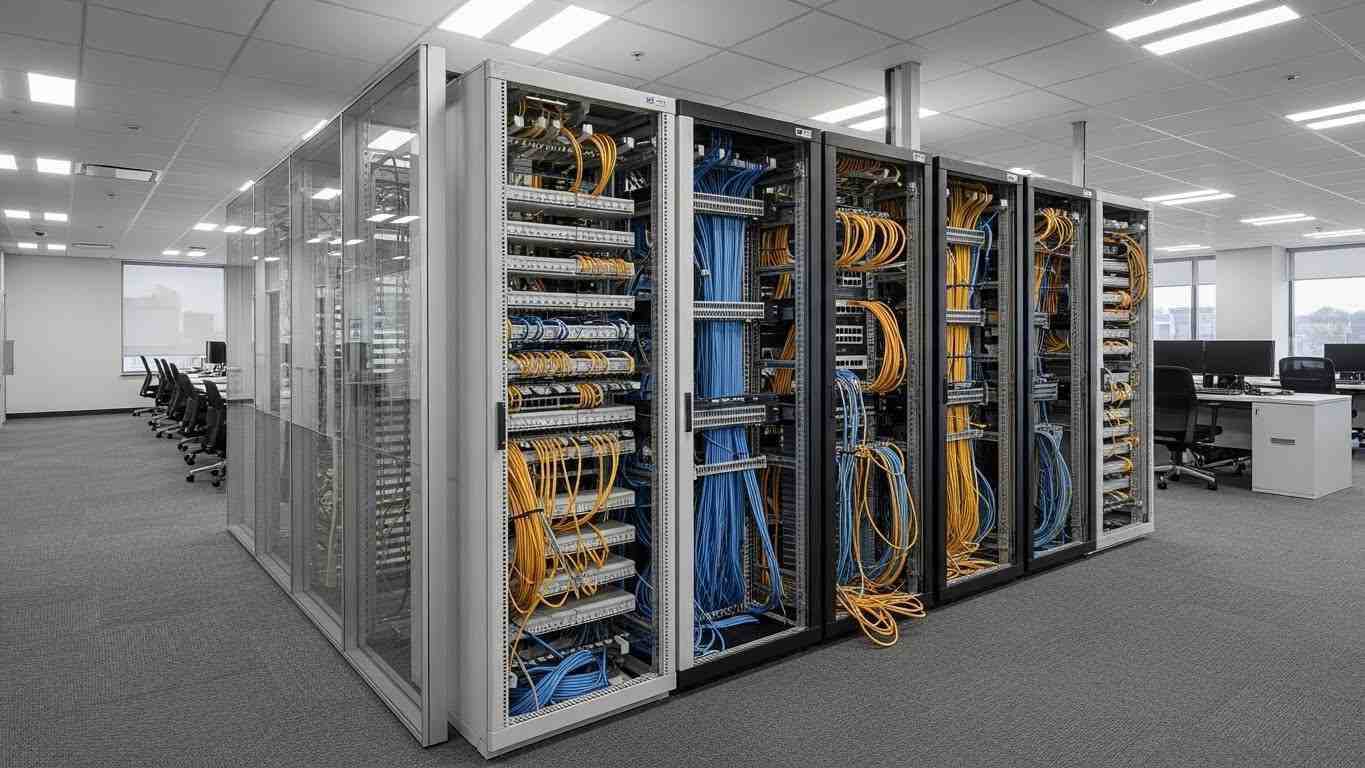
A well-designed structured cabling system is the backbone of any modern business, supporting high-speed data transfer, clear voice communication, and seamless device connectivity. Without proper cabling infrastructure, businesses risk frequent downtime, slow connections, and costly maintenance issues.
According to a study by the Telecommunications Industry Association (TIA), nearly 70% of network downtime is caused by cabling issues, making proper design and installation critical for long-term performance.
A structured cabling system provides a standardized and organized way to connect different devices within a business. Unlike point-to-point cabling, which leads to tangled wires and chaotic connections, structured cabling uses a centralized, hierarchical design that:
Reduces network failures by preventing messy cable management.
Supports faster troubleshooting through clear labeling and documentation.
Simplifies future upgrades with a scalable infrastructure.
Fact: Businesses with structured cabling experience 50% fewer connectivity issues than those with unstructured cabling, according to the International Journal of Networking.
Poorly designed cabling can lead to bottlenecks, slow network speeds, frequent disconnections, and higher long-term expenses. According to a BICSI study, companies that planned for network growth reduced long-term cabling costs by 30% compared to those that did not.
A scalable cabling system grows with your business without requiring major overhauls or expensive upgrades. The goal is to future-proof your network, allowing for higher data loads, increased device connectivity, and seamless integration with new technologies.
A common mistake in network cabling is underestimating future bandwidth needs. Many businesses install cabling based only on current requirements, leading to bottlenecks and expensive rework as the network expands.
Example: A financial services firm expected to double its staff within three years. By installing high-capacity fiber-optic cabling instead of standard Cat5e cables, they avoided costly network slowdowns and reinstallation fees.
Messy and unorganized cabling creates performance issues and makes troubleshooting and maintenance more difficult. Poor cable management restricts airflow, leading to overheating of network devices, which reduces their lifespan.
Example: A hospital network experienced frequent Wi-Fi dropouts. Upon inspection, the IT team found excessively tangled network cables in ceiling trays, blocking airflow and leading to equipment overheating. After re-organizing and labeling cables, downtime reduced by 40%.
Using low-quality cables and connectors can result in signal degradation, poor network performance, and frequent repairs. Cheap materials also wear out faster, leading to higher long-term costs.
Fact: Studies show that low-quality network cables degrade 40% faster than high-quality cables, leading to frequent replacement costs.
Example: An eCommerce company faced slow network speeds and frequent disconnections in its warehouse. The issue was traced back to cheap, low-quality Ethernet cables. After switching to high-grade Cat6a cables, network speeds improved by 60%, and downtime decreased by 35%.
Network failures can disrupt business operations, leading to productivity losses and security risks. A redundant cabling system ensures that if one connection fails, there is a backup in place.
Example: A bank’s data center experienced network downtime due to a single-point failure in its cabling infrastructure. After implementing a redundant fiber-optic backbone, downtime was reduced by 80%, ensuring uninterrupted access to financial systems
One of the biggest challenges in network maintenance is poor labeling and lack of documentation. Without clear cable identification, troubleshooting takes longer, increasing repair times and operational costs.
Fact: Networks with properly labeled cables reduce maintenance time by up to 50% compared to unlabeled networks.
Example: A university IT department spent days identifying mislabeled cables during an infrastructure upgrade. After implementing a structured labeling system, future troubleshooting was completed 75% faster.
A hierarchical network design creates an efficient and scalable cabling system. The design follows a structured, tiered approach to organizing cables, reducing network congestion, and simplifying maintenance.
Tier | Function |
Core Layer | High-speed backbone that connects all major network components. |
Distribution Layer | Bridges the core with access points, organizing traffic efficiently. |
Access Layer | Connects individual devices (computers, phones, printers) to the network. |
Businesses can easily scale and modify their networks without affecting the entire infrastructure by designing cabling systems in a tiered structure.
Voice and data cabling is the foundation of all communication systems, transmitting information through physical cables that connect devices to telephones, computers, servers, and wireless access points.
Ensures high-speed internet and clear voice communication.
Reduces connection disruptions and signal interference.
Supports emerging technologies like VoIP and cloud computing.
Example: A healthcare provider switched from outdated copper cabling to fiber-optic structured cabling, reducing network downtime by 40% and improving patient data transfer speeds by 60%.
Benefit | Description |
Seamless Technology Upgrades | Structured cabling allows businesses to upgrade networks without complete overhauls. |
Optimal Network Performance | Reduces interference, improves data speeds, and supports real-time communication. |
Scalable Growth | Supports more devices without increasing complexity. |
Choosing the right cable type depends on network size, data speed requirements, and environmental factors.
Cable Type | Speed & Bandwidth | Best For |
CAT5e | 1 Gbps, 100 MHz | Small businesses, VoIP phones, general office use |
CAT6 | 10 Gbps, 250 MHz | Large offices, high-speed internet needs |
CAT6a | 10 Gbps, 500 MHz | Data centers, industrial networks, reduced interference |
CAT7 | 40 Gbps, 600 MHz | Ultra-fast applications, high-performance networks |
A CAT6a cable transmits data 10 times faster than CAT5e, making it the preferred choice for businesses planning future expansions.
Proper installation ensures long-lasting performance and reliability. Following best practices can prevent signal loss, reduce maintenance costs, and ensure safety.
Before installation, assess network size, bandwidth needs, and scalability requirements.
Follow EIA/TIA-568 and IEEE standards to meet performance and safety regulations.
Use high-quality cables, connectors, and patch panels to prevent degradation over time.
Avoid bending cables beyond their recommended radius.
Keep cables away from electrical sources to reduce interference.
Every cable should be clearly labeled for easy troubleshooting and future upgrades.
Example: A financial institution labeled all cables with QR codes, allowing IT teams to instantly access network maps and troubleshooting guides.
Testing ensures cables are properly terminated, free from defects, and meet performance standards.
Studies show that networks with pre-installation testing experience 30% fewer connectivity issues than those that skip this step.
A structured cabling system is a long-term investment in network reliability and efficiency. Businesses that implement scalable, well-organized cabling infrastructure benefit from:
Faster network speeds and minimal downtime
Easier maintenance and troubleshooting
Reduced operational costs over time
For expert cabling solutions, contact Network Drops today and future-proof your network with high-quality installation.
A hierarchical design organizes your cabling in layers, creating a clear structure for managing, scaling, and troubleshooting your network. It simplifies the process of adding new connections or making changes without affecting the entire network, making it more efficient in the long term.
CAT5e supports speeds up to 1 Gbps, making it suitable for smaller, less demanding environments. CAT6 improves on this, supporting speeds of up to 10 Gbps and reducing interference. CAT7 is designed for high-performance applications, supporting speeds up to 40 Gbps and offering superior shielding against interference.
Carefully planned cable pathways help prevent network congestion, reduce signal interference, and ensure easy access for future upgrades or troubleshooting. Proper planning also avoids the risk of costly rework and ensures the network remains reliable and efficient over time.
Using low-quality cables can lead to frequent downtime, signal interference, and higher maintenance costs. Poor cables may also degrade network performance over time, resulting in slower speeds and more frequent issues. High-quality cables provide better performance, greater durability, and long-term reliability.
To future-proof your structured cabling, use higher-grade cables like CAT6a or fiber-optic, which support faster speeds and more bandwidth. Design the system with scalability in mind, label and document all connections for easy management, and thoroughly test cables during installation to ensure optimal performance.

Scott Fcasni is the driving force behind Magna5’s commercial datacomm cabling division, delivering expert solutions that power reliable, high-performance network infrastructures. With extensive experience in structured cabling and a commitment to precision, Scott ensures that every project—whether for small businesses or large enterprises—meets the highest standards of quality and scalability.
